Indian IT Feels the Pinch of Slow Revenue Growth: Is This Just a Pause or the New Normal? | Savishty
Indian IT Feels the Pinch of Slow Revenue Growth: Is This Just a Pause or the New Normal?
For years, India's IT industry has been the engine powering global digital transformation. Every quarter brought billion-dollar deals, hiring sprees, and optimistic revenue forecasts. But the latest earnings season tells a different story.
The deals are still coming in. The problem is that they're no longer translating into the kind of revenue growth the industry was once known for.
Growth Is Slowing, Not Stopping
India's leading IT companies continue to win new business, but turning those deals into meaningful growth has become increasingly difficult.
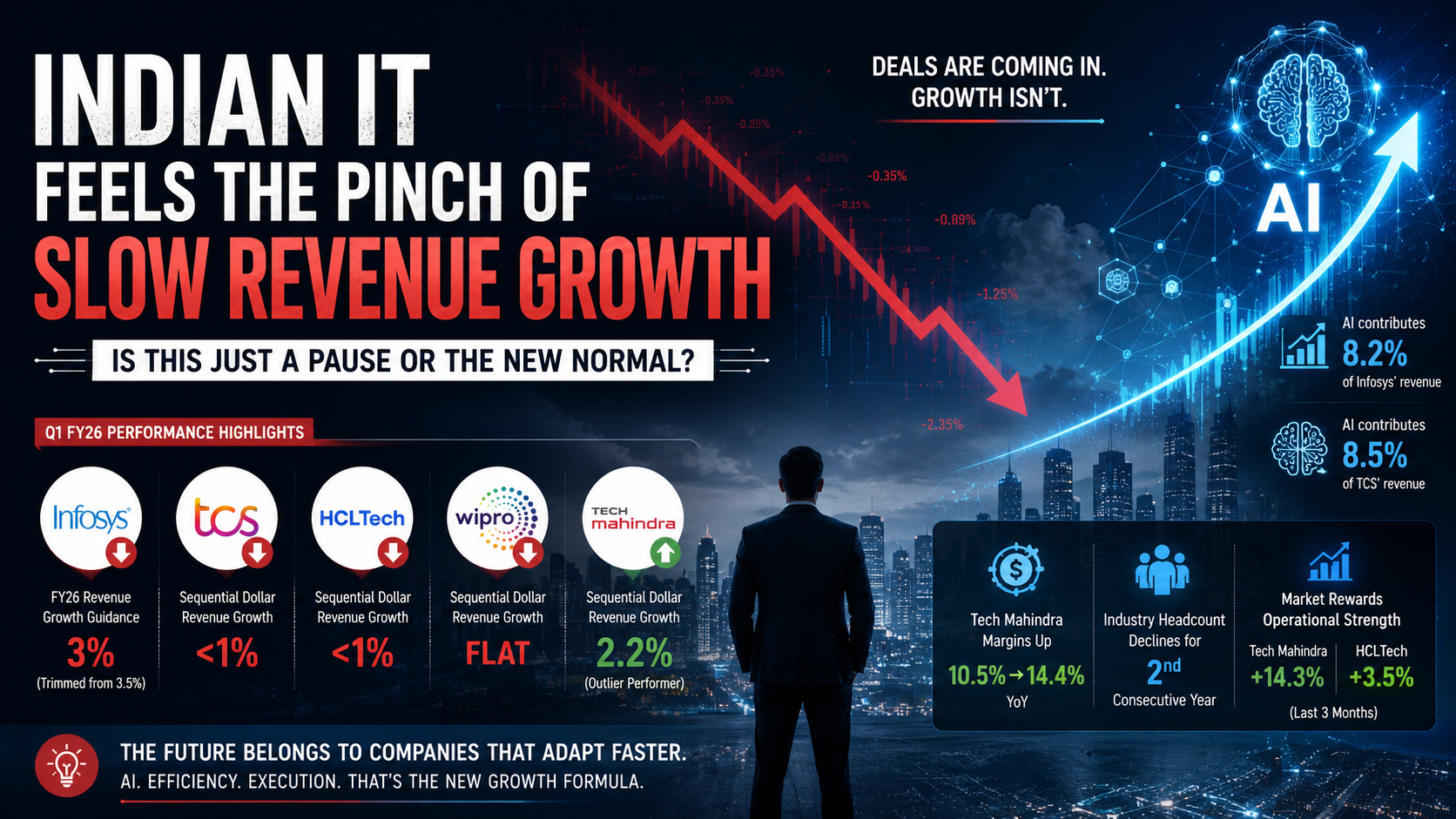
Recent quarterly numbers highlight the trend:
Company
Latest Performance
Infosys
Reduced FY26 revenue growth guidance from 3.5% to 3%
TCS
Reported less than 1% sequential dollar revenue growth
HCLTech
Posted sub-1% sequential growth
Wipro
Recorded flat revenue growth
Tech Mahindra
Stood out with 2.2% sequential growth
The message is clear: demand hasn't disappeared, but clients are spending more cautiously. Companies are delaying large transformation projects, approving budgets more slowly, and expecting more value from every technology investment.
AI Is Starting to Make an Impact
While overall growth remains muted, artificial intelligence is becoming a meaningful contributor to revenue.
According to the latest figures:
AI contributes around 8.2% of Infosys' revenue
AI contributes approximately 8.5% of TCS' revenue
These percentages may seem modest, but they signal an important shift. AI is moving beyond pilot projects and becoming a genuine business line for India's IT giants.
However, AI alone isn't yet large enough to offset slower spending across traditional services.
Profitability Tells a Different Story
Revenue growth isn't the only metric investors watch.
Tech Mahindra improved its operating margin significantly—from 10.5% last year to 14.4%. That suggests companies are becoming more disciplined about costs and focusing on operational efficiency instead of aggressive expansion.
At the same time, headcount has continued to decline for the second consecutive year across parts of the industry. Instead of hiring at scale, companies are prioritizing productivity, automation, and AI-assisted delivery.
The Stock Market Sees Winners and Losers
Investors have rewarded companies that demonstrate operational strength.
Over the past three months:
Tech Mahindra gained 14.3%
HCLTech rose 3.5%
Meanwhile, several other major IT stocks declined between 6% and 12%, reflecting concerns over slower growth and cautious client spending.
The market is no longer rewarding size alone. It is rewarding execution, efficiency, and the ability to adapt quickly.
What This Means for the IT Industry
The industry isn't in crisis but it is entering a new phase.
Instead of chasing rapid expansion, IT companies are now balancing three priorities:
Winning high-value AI projects
Improving operational efficiency
Delivering more value with leaner teams
Growth is becoming harder to achieve, but companies that successfully combine AI, automation, and strong execution are likely to emerge stronger.
Final Thoughts
India's IT sector has weathered global recessions, technology shifts, and changing client expectations before. This slowdown is another reminder that every industry evolves.
The next chapter won't be defined by who hires the most people or signs the biggest contracts. It will be defined by who can convert innovation into sustainable growth.
For professionals, investors, and businesses alike, the takeaway is simple: the future belongs to companies that can adapt faster than the market changes.
Did you find this helpful?