Can AWS Power the Next Generation of Autonomous AI Agents? | Savishty
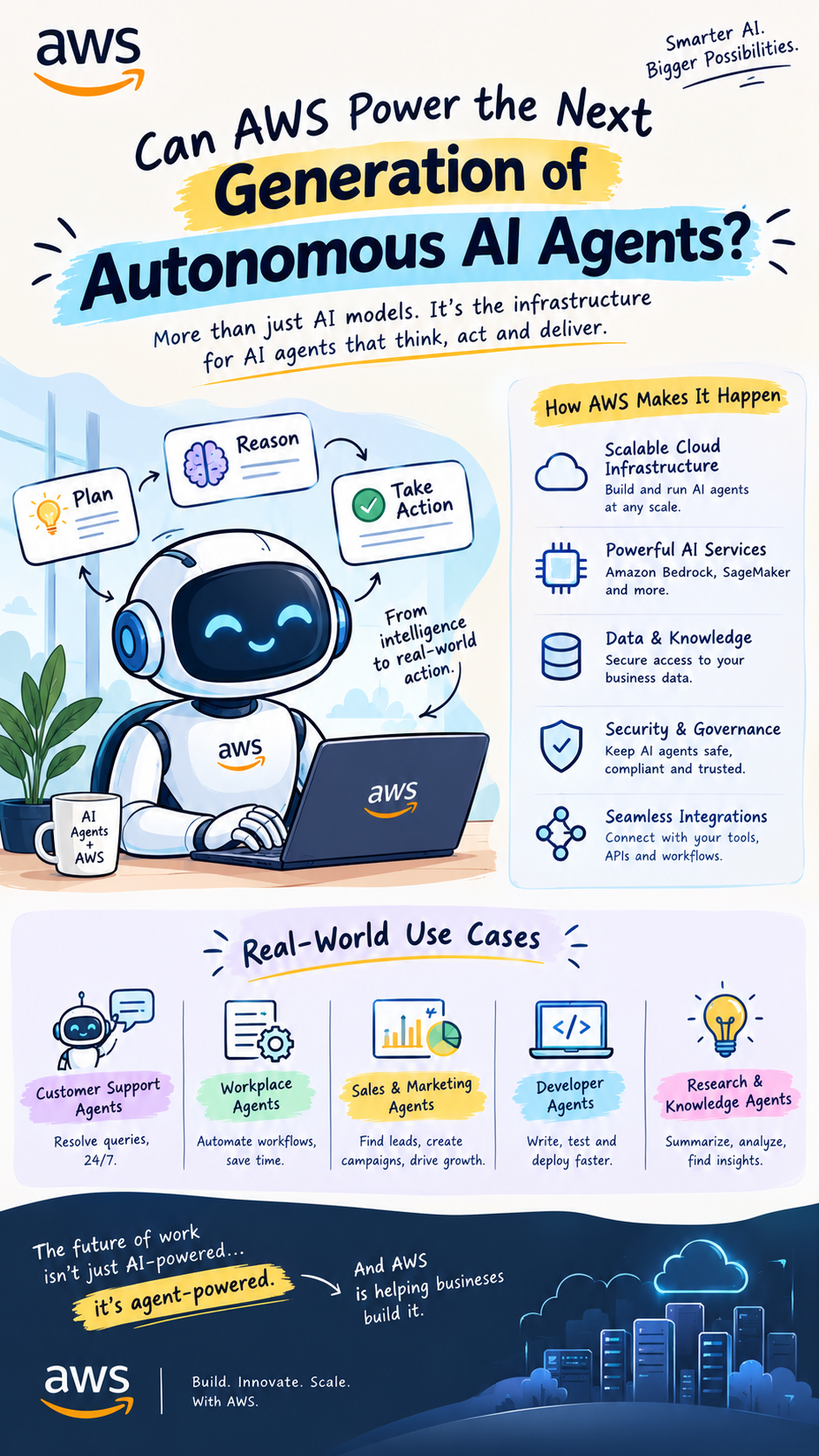
Introduction: Is the Future of AI About Agents That Can Think and Act?
Artificial Intelligence is moving beyond simple chatbots.
Until recently, most AI applications were designed to answer questions, generate content, summarize documents, or assist users with specific tasks.
But the next generation of AI is taking things further.
Imagine an AI system that can understand a business requirement, create a plan, access relevant data, use external tools, make decisions, and complete tasks with minimal human intervention.
This is the idea behind Autonomous AI Agents.
From automating customer support and managing business workflows to assisting developers and analyzing complex datasets, AI agents could fundamentally change how organizations operate.
But building these intelligent systems requires more than just an AI model. Businesses need scalable infrastructure, secure data access, orchestration, monitoring, and reliable integrations.
This is where Amazon Web Services (AWS) comes into the picture.
With its cloud infrastructure, foundation models, AI development tools, and agent-building capabilities, AWS is positioning itself as an important platform for the next generation of autonomous AI applications.
Let's explore how.
1. What Are Autonomous AI Agents?
What Are AI Agents and How to Build Them [2026]
Autonomous AI agents are intelligent software systems that can work toward specific goals by understanding instructions, planning actions, using tools, and evaluating results.
Unlike traditional chatbots that primarily respond to user prompts, AI agents can perform multiple connected steps to complete a task.
For example, imagine asking an AI agent:
"Find potential customers, research their businesses, prepare personalized emails, and organize the results in a spreadsheet."
An autonomous AI agent could potentially:
Understand the business objective.
Search for relevant customer information.
Analyze available data.
Prepare personalized email drafts.
Update a CRM or spreadsheet.
Report the completed work.
Depending on its permissions and configuration, it may also execute approved actions.
The biggest difference?
Traditional AI generates answers. AI agents can use AI capabilities to complete workflows and take actions.
However, autonomy does not mean unlimited independence. Businesses still need human oversight, access controls, and approval mechanisms for sensitive operations.
2. How AWS Supports Autonomous AI Agents
Guidance for Multi-Agent Orchestration on AWS
AWS provides a range of services that developers can combine to build, deploy, and operate AI agents.
Here are some of the most important technologies.
A. Amazon Bedrock – The AI Foundation
Amazon Bedrock provides access to foundation models from Amazon and other AI providers through a managed service.
Businesses can use it to build generative AI applications without managing their own foundation-model infrastructure.
Key capabilities include:
Access to multiple foundation models.
Generating and processing natural language.
Retrieval-Augmented Generation (RAG).
Connecting AI applications with enterprise data.
Building agent-based applications.
For example, a company can build an AI customer support agent that uses internal product documentation to answer questions and access approved business systems.
B. Amazon Bedrock AgentCore – Building and Operating AI Agents
One of AWS's important offerings for agentic AI is Amazon Bedrock AgentCore.
AgentCore helps developers deploy and operate AI agents securely at scale.
Its modular capabilities include:
Capability
What it does
AgentCore Runtime
Runs AI agents in a managed, isolated environment
AgentCore Memory
Maintains short-term and long-term context
AgentCore Gateway
Connects agents to APIs and external tools
AgentCore Identity
Manages agent authentication and access
AgentCore Observability
Helps monitor, trace, and debug agent activities
AgentCore Policy
Supports governance over agent actions
Another important advantage is flexibility. AgentCore supports different agent frameworks and foundation models, rather than forcing developers to use only one framework or model provider.
AWS Prescriptive Guidance+1
C. Amazon SageMaker – Developing and Customizing AI Models
Amazon SageMaker helps businesses build, train, customize, and deploy machine learning models.
It can support AI agent development when organizations need specialized models or machine learning workflows.
For example:
Predicting customer behavior.
Detecting unusual transactions.
Forecasting inventory requirements.
Building industry-specific machine learning models.
When combined with agent orchestration, these capabilities can help AI systems make more informed decisions.
D. AWS Lambda – Enabling AI Agents to Take Action
We love AWS Lambda and C# .Net
An AI agent needs more than intelligence. It needs the ability to interact with other systems.
AWS Lambda allows developers to execute code without managing servers.
It can help agents:
Retrieve information from databases.
Trigger automated workflows.
Update business records.
Send notifications.
Connect with third-party APIs.
For example, when an AI sales agent identifies a qualified lead, it can invoke an approved Lambda function to create a CRM record.
E. Amazon S3 and AWS Databases – Providing Business Knowledge
AI agents become more useful when they can access relevant and reliable business information.
AWS provides data services such as:
Amazon S3 – Stores documents, files, and business data.
Amazon RDS – Stores structured application data.
Amazon DynamoDB – Supports applications requiring flexible, scalable data storage.
These services can provide the information agents need to answer questions, retrieve records, and perform business tasks, subject to access permissions.
3. How Does an Autonomous AI Agent Work on AWS?
Let's understand this through a simple example.
Imagine an e-commerce company wants to automate its customer support operations.
A customer asks:
"Where is my order, and can you help me change the delivery address?"
Here's how an AWS-powered AI agent could handle the request.
Step 1: Understand the request
The AI model processes the customer's message and identifies the required task.
Step 2: Retrieve information
The agent connects to an approved business database or order management API to retrieve order details.
Step 3: Make a decision
It checks the company's delivery policy and determines whether the address can still be changed.
Step 4: Take action
If permitted, it invokes an approved tool or API to update the delivery address. Sensitive changes can require customer verification or human approval.
Step 5: Respond to the customer
The agent confirms the result and provides the updated delivery information.
This workflow can use Amazon Bedrock, AgentCore, AWS Lambda, and business databases.
The important point is that the AI agent is not simply generating a response. It is coordinating multiple systems to complete a business process.
4. Real-World Business Applications of Autonomous AI Agents
Building AI Agents Without Breaking Security Rules | by Pankaj Bisht | AI Snapshots | Medium
Autonomous AI agents have the potential to transform several industries.
Here are five practical applications.
1. Customer Support Automation
AI agents can understand customer queries, retrieve account information, check order status, and assist with routine support requests.
Business benefit: Faster customer responses and reduced repetitive workload.
2. Recruitment and HR Automation
AI-powered recruitment agents can help HR teams:
Search for candidates based on job requirements.
Analyze resumes against job descriptions.
Schedule interviews.
Prepare candidate summaries.
Send follow-up reminders.
Business benefit: Less manual coordination and more time for meaningful candidate interactions.
3. Financial Operations
AI agents can support financial teams with:
Invoice information extraction.
Transaction analysis.
Expense categorization.
Financial report preparation.
Identifying unusual transactions for review.
Business benefit: More efficient financial workflows and better operational visibility.
4. Software Development
AI agents can assist developers with:
Writing and reviewing code.
Identifying potential bugs.
Generating test cases.
Analyzing application logs.
Supporting deployment workflows.
Business benefit: Faster development cycles and reduced repetitive engineering tasks.
5. Sales and Marketing Automation
AI agents can support sales and marketing teams by:
Researching potential customers.
Analyzing business requirements.
Preparing personalized outreach drafts.
Updating CRM information.
Generating campaign insights.
Business benefit: More efficient lead management and improved sales productivity.
These use cases still require proper validation, permissions, and human review for important decisions.
5. Why Security and Governance Matter for Autonomous AI Agents
Fortinet expands NVIDIA tie-up to secure enterprise AI
As AI agents become more autonomous, security becomes one of the biggest challenges.
Think about it.
An AI agent might access customer information, interact with financial systems, execute code, or modify business records.
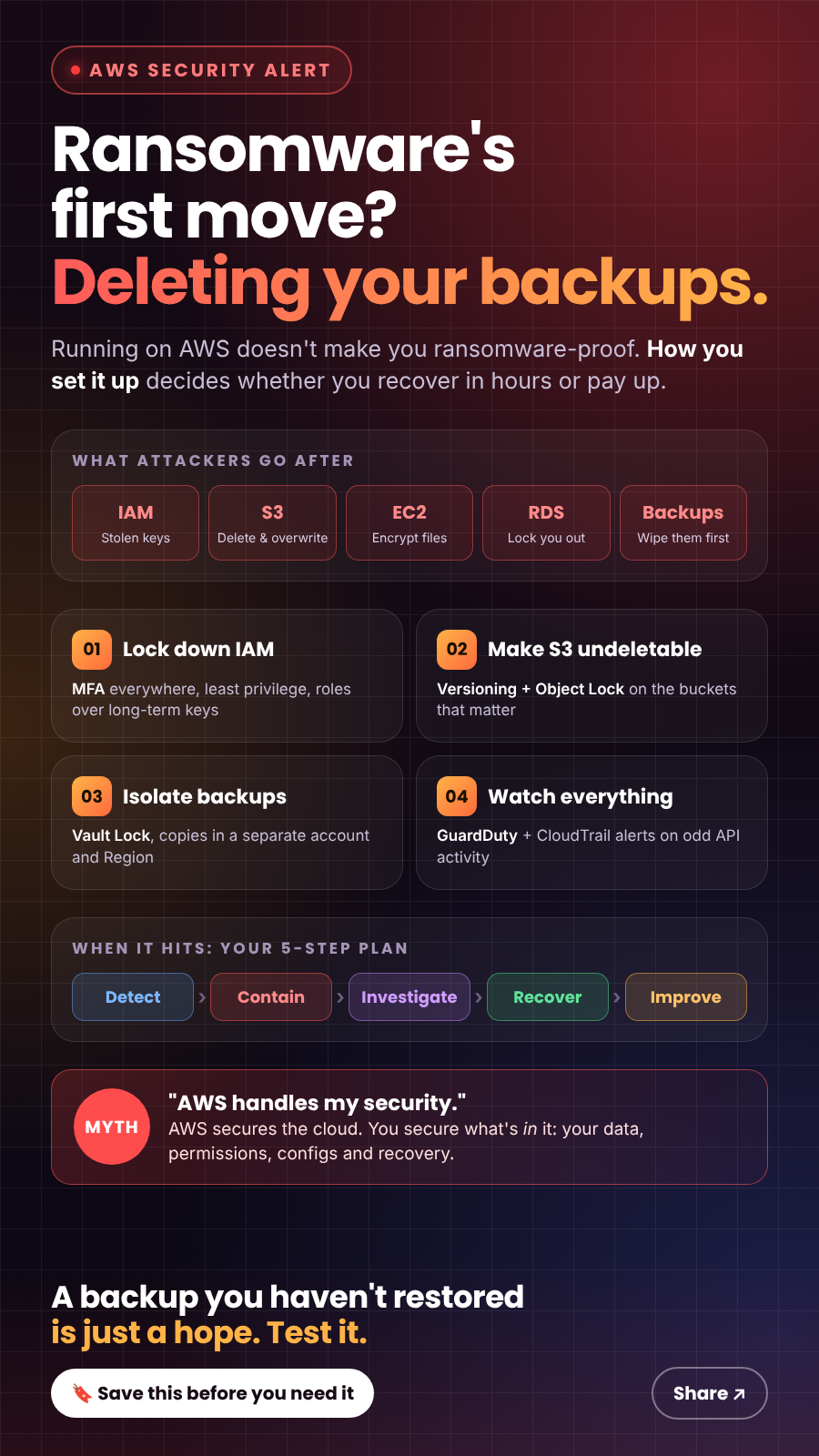
Without proper controls, a single incorrect action could create significant business risks.
AWS provides several security capabilities that businesses can use to manage these risks.
Important security considerations include:
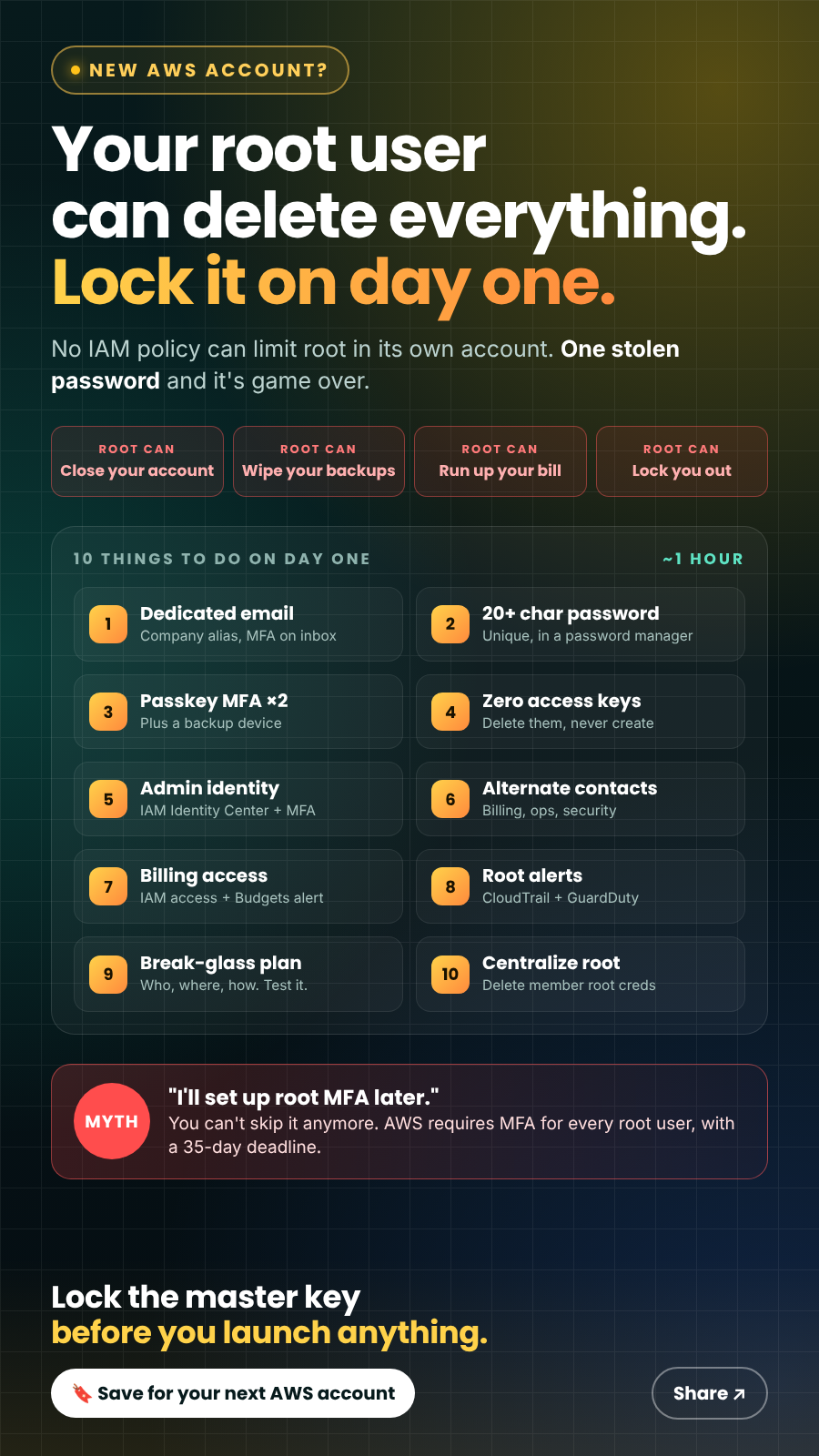
AWS IAM: Apply least-privilege access permissions.
Amazon Bedrock Guardrails: Help filter unwanted content and enforce configured safeguards.
AWS KMS: Protect sensitive information through encryption key management.
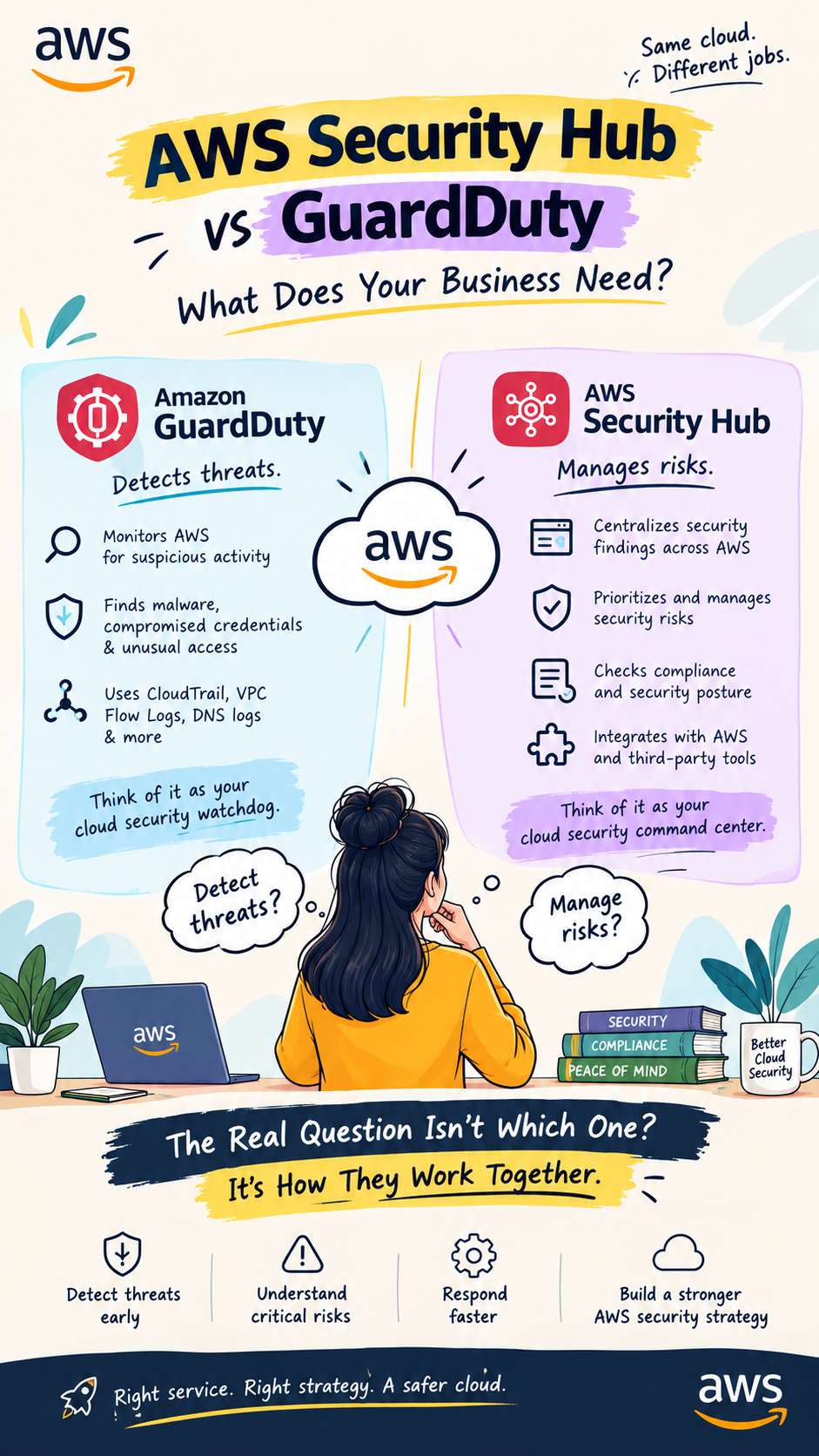
Amazon CloudWatch: Monitor application activity and operational performance.
Amazon CloudTrail: Maintain records of supported AWS API activity.
AgentCore Identity and Policy: Help control agent identity, authentication, and permitted actions.
Organizations should also implement human approval for sensitive operations, maintain audit trails, test agent behavior, and monitor unexpected actions.
AWS's security guidance emphasizes layered protection for generative AI and agentic applications.
AWS Prescriptive Guidance+2
Remember: An intelligent AI agent is valuable only when it can operate safely and reliably.
6. What Challenges Do Businesses Need to Consider?
Despite the opportunities, autonomous AI agents are not without challenges.
Before implementing them, businesses should consider the following:
Challenge
Why it matters
Infrastructure costs
Model usage, compute, storage, and API calls can increase costs
Data privacy
Agents may access sensitive business information
Incorrect decisions
AI-generated outputs may be inaccurate
Security risks
Excessive permissions can lead to unauthorized actions
Integration complexity
Connecting multiple business systems requires planning
Performance monitoring
Long-running workflows need continuous monitoring
Another important consideration is that greater autonomy does not automatically mean better results.
Businesses should begin with clearly defined workflows, test performance, and gradually increase the level of autonomy.
7. How Can Businesses Get Started with AWS-Powered AI Agents?
Amazon Bedrock Stateful Runtime: Build Persistent AI Agents
If your organization wants to explore autonomous AI agents, here is a practical implementation roadmap.
Step 1: Identify a business problem
Start with a repetitive process such as customer support, document processing, or lead qualification.
Step 2: Choose the right AI model
Explore Amazon Bedrock and select a suitable foundation model based on your requirements.
Step 3: Build the agent workflow
Use AgentCore and an appropriate agent framework to define instructions, tools, memory, and execution logic.
Step 4: Connect business systems
Integrate approved APIs, databases, and applications using suitable AWS services.
Step 5: Implement security controls
Configure authentication, permissions, data protection, and human approval mechanisms.
Step 6: Test and monitor performance
Evaluate accuracy, task completion, response times, operational costs, and security before moving to production.
Step 7: Scale gradually
Once the initial workflow performs reliably, expand the solution to other business processes.
For developers interested in building production-ready agents, AWS provides detailed guidance on AgentCore architecture and implementation.
AWS Prescriptive Guidance+1
8. The Future of Autonomous AI Agents on AWS
The future of AI is moving toward systems that can coordinate multiple specialized agents to complete complex tasks.
Imagine a business using several AI agents:
A research agent gathers information.
An analytics agent evaluates business data.
A sales agent prepares customer recommendations.
An operations agent coordinates approved workflows.
A supervisor agent manages the overall process.
This is the concept of multi-agent collaboration.
AWS is supporting this direction through its agentic AI ecosystem, including AgentCore, foundation models, tool integrations, and orchestration capabilities.
In November 2026, AWS also highlighted new AgentCore Harness capabilities, including lifecycle hooks and improved agent execution workflows. These developments reflect the growing importance of controlling what agents do throughout their execution cycle.
Artificial Intelligence+1
The next big opportunity may not be simply building smarter AI models. It may be building AI systems that can work together, use business tools, and complete meaningful tasks securely.
9. Final Thoughts: Can AWS Power the Next Generation of Autonomous AI Agents?
Absolutely. AWS provides many of the essential building blocks needed to develop and operate autonomous AI agents.
With Amazon Bedrock, AgentCore, SageMaker, Lambda, and its cloud infrastructure, businesses can create AI applications that move beyond basic conversations and support real-world business operations.
But successful implementation requires more than choosing the right AI model.
It requires the right architecture, secure integrations, reliable data, cost management, and continuous monitoring.
The future belongs to businesses that know how to turn AI intelligence into real business outcomes.
And autonomous AI agents could be one of the biggest steps in that direction.
Did you find this helpful?