What I Would Build Differently If I Were Starting a Cloud Startup Today | Savishty
If I Were Starting Again, I Would Build Less.
That's probably the first thing I'd change.
When you're starting a cloud or SaaS business, it's incredibly tempting to build for the company you hope you'll become.
You imagine millions of users.
Global traffic.
AI workloads.
Multiple regions.
Microservices everywhere.
Kubernetes.
Complex dashboards.
Twenty different AWS services.
It feels like you're building something serious.
But there's a problem.
You don't have millions of customers yet.
You have an idea.
Maybe 10 customers.
Maybe 100.
Maybe you're still trying to get your first paying customer.
If I were starting a cloud startup today, I'd approach infrastructure very differently.
I'd build something simple enough to understand, secure enough to trust, and flexible enough to grow.
Here's what that would look like.
1. I'd Start With the Customer, Not the Architecture
This sounds obvious.
It isn't.
Technical founders can spend weeks debating:
AWS vs Azure.
Containers vs serverless.
PostgreSQL vs NoSQL.
Kubernetes vs ECS.
Monolith vs microservices.
Meanwhile, the customer is still waiting for the product.
I'd start with a much simpler question:
What problem are we solving that someone will actually pay us to solve?
Then I'd build the smallest reliable system capable of solving it.
Infrastructure should support the product.
It shouldn't become the product.
Unless, of course, the infrastructure is the product.
2. I'd Keep the First Architecture Boring
"Boring" is underrated.
A simple architecture might look like:
Users → Application → Database → Storage
That's it.
Maybe there's a CDN.
Maybe there's a queue.
Maybe there's serverless processing.
But I'd add components only when there is a reason.
If Amazon RDS can handle the database, I wouldn't immediately build a complicated database cluster.
If a managed container platform solves the deployment problem, I wouldn't automatically introduce Kubernetes.
If AWS Lambda handles a workload nicely, I'd consider using it.
The goal isn't to use the most impressive technology.
The goal is to remove unnecessary problems.
3. I'd Design for Growth—but Not Pay for It Too Early
There's a difference between scalable architecture and overengineered architecture.
I'd make sure the system could scale horizontally.
I'd keep application components reasonably decoupled.
I'd avoid decisions that would make future migration painful.
I'd automate deployment from early on.
But I wouldn't build a global multi-region platform before I had customers in another region.
Why?
Because infrastructure has a cost.
And engineering time has an even bigger cost.
I'd rather spend that money talking to customers.
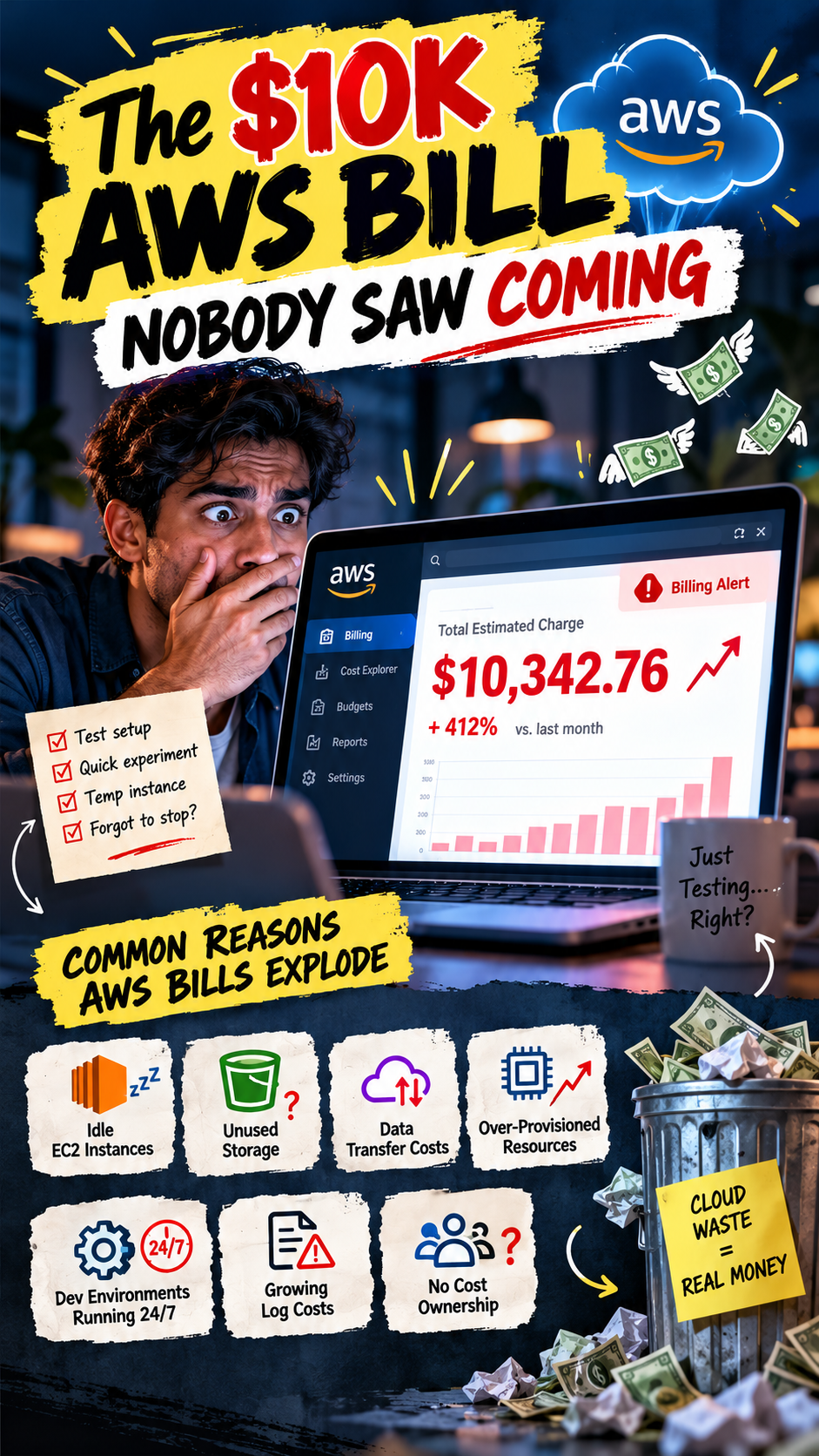
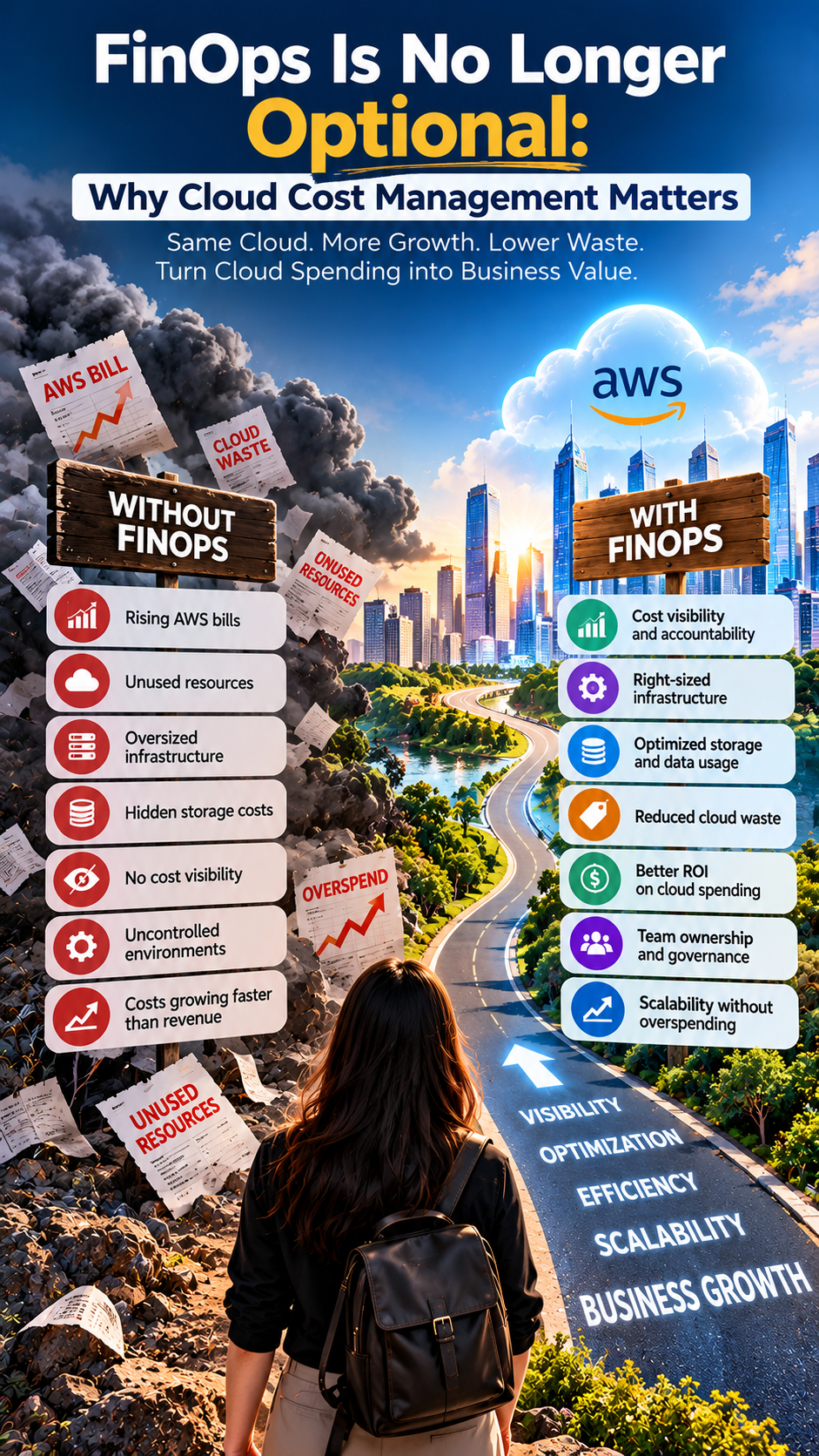
4. I'd Treat Cloud Costs Like a Product Metric
This one would be high on my list.
A lot of startups look at revenue every week.
They look at customer acquisition.
They look at churn.
They look at conversion.
But cloud costs?
Someone checks them when the bill arrives.
That's too late.
I'd track:
Cost per customer
Cost per active user
Cost per transaction
Cost per AI request
Infrastructure cost as a percentage of revenue
Because if revenue grows 5x but cloud costs grow 20x, something isn't working.
Cloud cost optimization isn't about making the smallest possible AWS bill.
It's about understanding what you're paying for.
5. I'd Automate Much Earlier
If I have to do something manually more than a few times, I'd ask:
Can we automate this?
Deployments.
Testing.
Backups.
Infrastructure provisioning.
Monitoring.
Alerts.
Scaling.
Security checks.
The earlier these processes become automated, the easier it is to grow without constantly adding people just to keep the system running.
Tools such as Infrastructure as Code can help make infrastructure repeatable instead of dependent on someone's memory.
That's important when your original engineer eventually says:
"I know how this works."
And then takes a vacation.
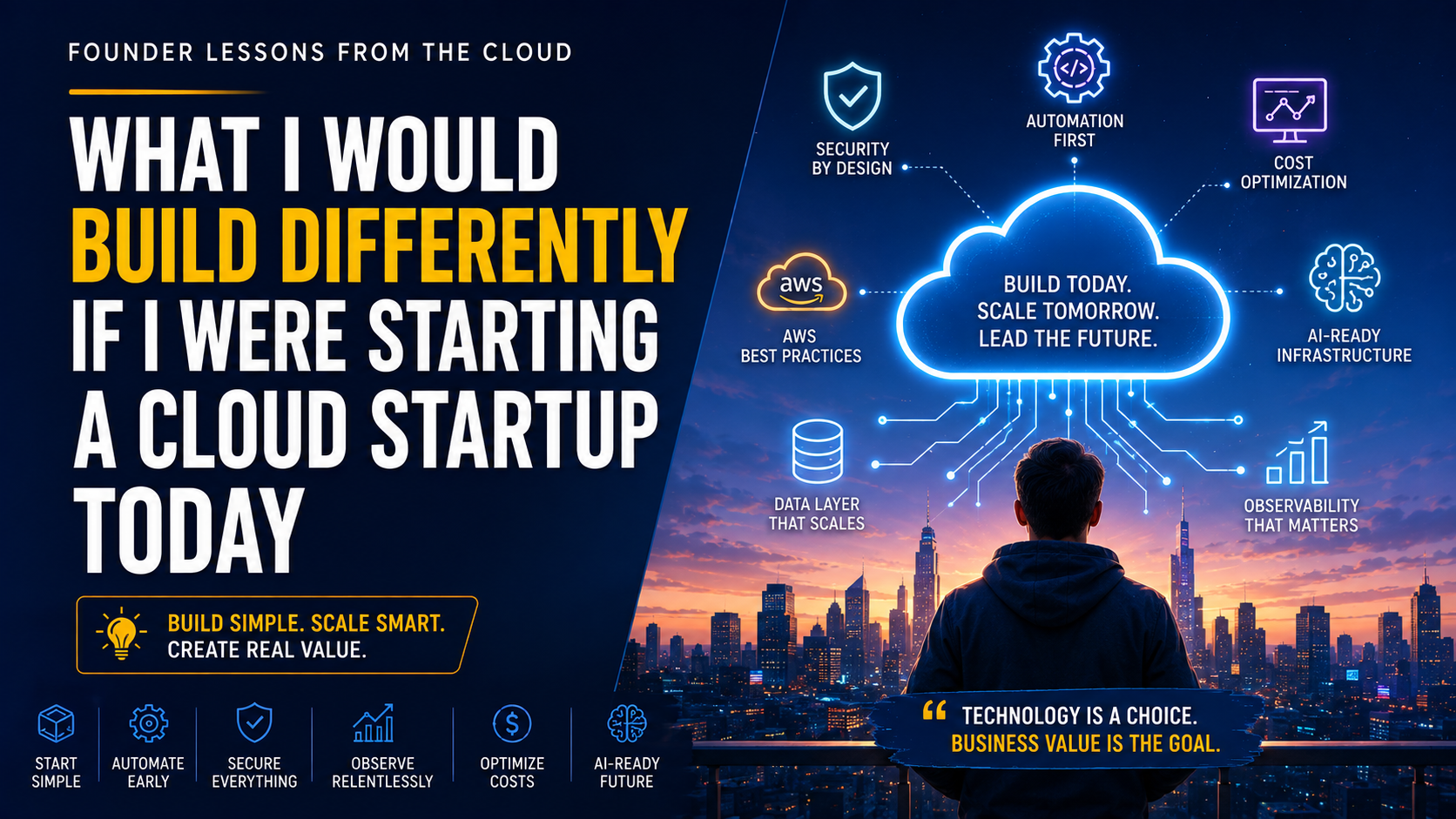
6. I'd Make Security Part of the Architecture
I wouldn't wait until the company became "big enough" to care about security.
Because customer data doesn't know how big your startup is.
From the beginning, I'd focus on:
MFA
Least-privilege access
Encryption
Secure secrets management
Separate development and production environments
Logging
Regular backups
Access reviews
Security monitoring
The goal isn't to create a giant security department.
It's to avoid making preventable mistakes.
One overly broad permission can become a serious problem.
7. I'd Build Observability Before I Needed It
There's a difference between knowing that your application is down and knowing why it's down.
I'd want visibility into:
Latency
Errors
CPU and memory
Database performance
Traffic
Application logs
Infrastructure events
Deployment changes
Services such as Amazon CloudWatch can provide monitoring and observability capabilities across AWS workloads.
The important part isn't collecting thousands of metrics.
It's knowing which signals actually matter.
Because when something breaks at 2 AM, you don't want your first step to be:
"Let's figure out what happened."
You want:
"Here's what changed, here's where the problem is, and here's what we need to do."
8. I'd Plan for AI From Day One—Without Forcing AI Everywhere
This is probably the biggest difference between starting a cloud company today and starting one a few years ago.
AI is becoming part of the infrastructure conversation.
Even if my initial product didn't need AI, I'd think about how AI might eventually interact with:
Customer data
Product workflows
Search
Automation
Analytics
Support
Personalization
But I wouldn't slap an AI chatbot onto the product just because every competitor has one.
I'd ask:
"Where can AI create measurable value for the customer?"
If the answer is nowhere, I'd wait.
If there's a strong use case, I'd build it properly.
Services such as Amazon Bedrock can make it easier for startups to experiment with generative AI without building foundation models themselves.
9. I'd Build the Data Layer Carefully
Here's something I would take seriously from the beginning.
Data becomes harder to fix later.
Where does customer data live?
How is it structured?
Who can access it?
How long do we keep it?
How do we back it up?
How do we delete it?
Can we analyze it later?
Can AI systems use it safely?
I'd rather make these decisions early than discover two years later that the company's data is spread across 14 systems and nobody knows which version is correct.
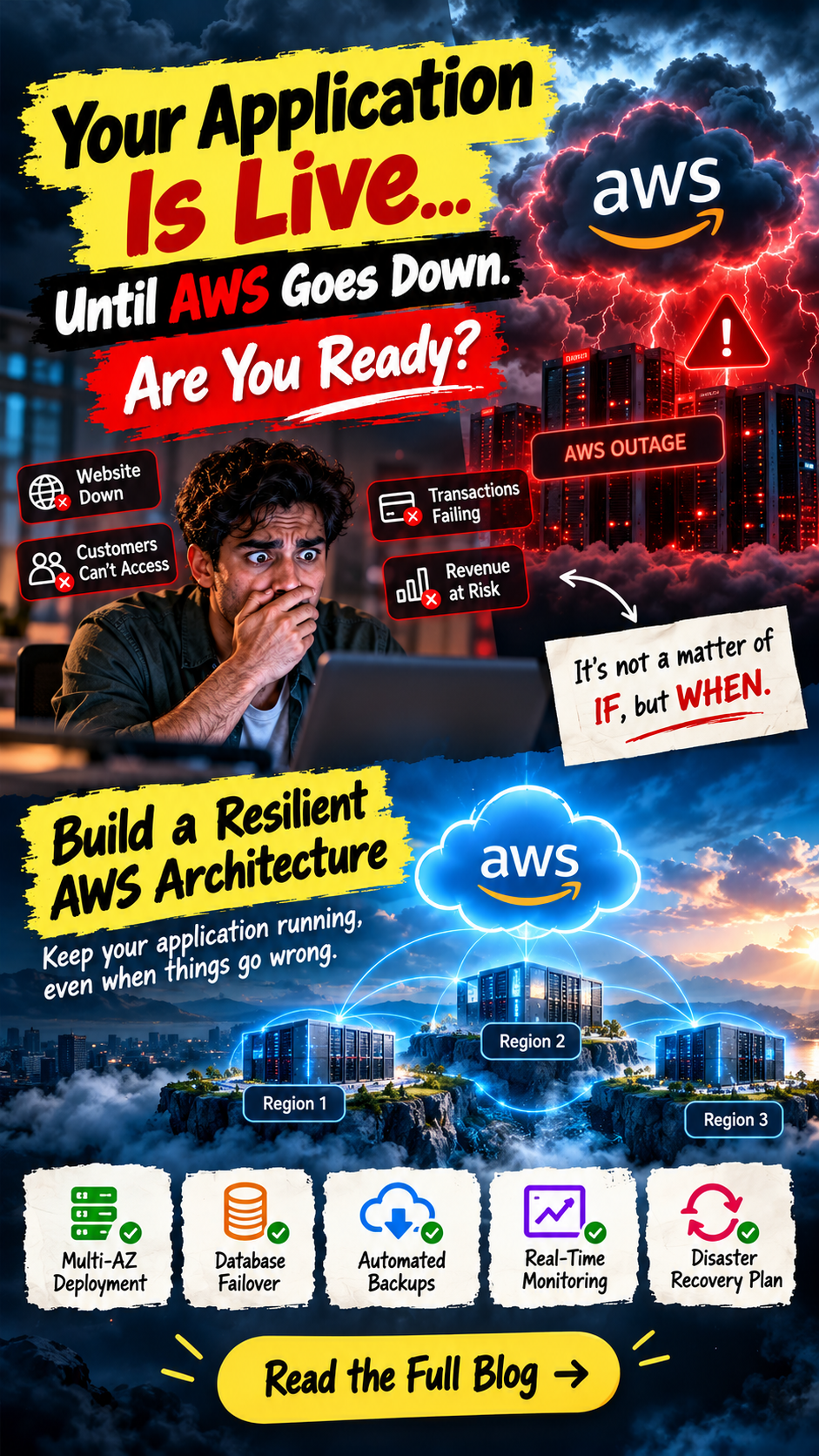
10. I'd Design the Product for Failure
Everything breaks eventually.
A server.
A database.
A third-party API.
A network connection.
A deployment.
A developer's code.
The question isn't:
"How do we make sure nothing fails?"
That's impossible.
I'd ask:
"What happens when this fails?"
Can the system retry?
Can traffic be redirected?
Can we restore the database?
Can we roll back the deployment?
Can customers continue using other parts of the product?
Can the team quickly understand what happened?
That's resilience.
11. I'd Avoid Microservices Until They Solve a Real Problem
This one might annoy some engineers.
But I'd rather have a well-designed modular monolith than 30 microservices nobody knows how to operate.
Microservices can be extremely useful.
But they also introduce:
More deployments.
More networking.
More monitoring.
More failure points.
More infrastructure.
More operational complexity.
I'd introduce them when the organization and product actually benefit from them.
Not because a conference presentation made them look sophisticated.
12. I'd Think About the Team as Part of the Architecture
This is often overlooked.
Imagine an infrastructure setup that technically works—but requires three senior engineers to operate it every day.
Is it scalable?
Not really.
I'd ask:
Can a new engineer understand this system?
Can we deploy without calling the CTO?
Can someone troubleshoot an incident without knowing the entire history of the company?
Can infrastructure be reproduced automatically?
The best architecture isn't just scalable for machines.
It's scalable for people.
13. I'd Choose Managed Services More Often
If AWS can manage the undifferentiated heavy lifting, I'd seriously consider letting it.
Databases.
Storage.
Queues.
Monitoring.
Identity.
Backups.
Certain AI capabilities.
The startup's competitive advantage isn't usually:
"We manually maintain our database servers better than everyone else."
It's the product.
Use managed services where they make business sense.
Spend engineering talent where it creates differentiation.
14. I'd Build for the Business Model
Infrastructure decisions should connect to economics.
Imagine two businesses.
Company A has customers who make one request per month.
Company B has customers making thousands of requests per minute.
They shouldn't have the same architecture.
Likewise, an AI startup, an e-commerce platform, a B2B SaaS product, and a fintech application have very different infrastructure requirements.
There's no universal "best cloud architecture."
The architecture should reflect how the business actually works.
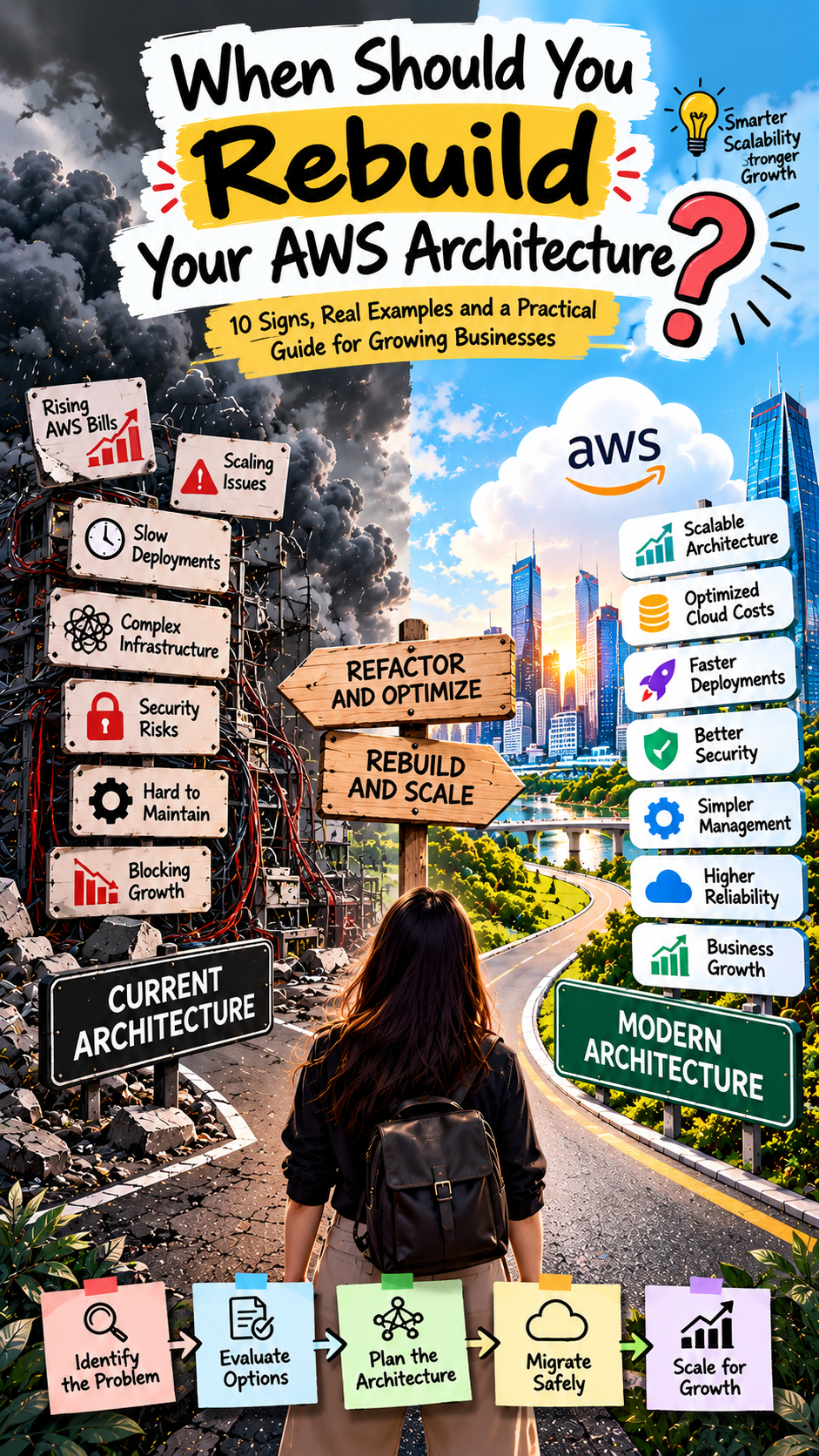
15. I'd Keep One Eye on the Next 12 Months
Not the next 10 years.
I'd ask:
What will break if we grow 10x?
That's a much more useful question.
Maybe it's the database.
Maybe it's cloud costs.
Maybe it's support.
Maybe it's deployment speed.
Maybe it's a third-party API.
Maybe it's the engineering team.
Then I'd fix that.
Not everything.
Just the thing most likely to become the next bottleneck.
What Would My Startup Stack Look Like?
It would depend heavily on the product.
But conceptually, I'd aim for something like:
Cloud infrastructure
→ Scalable compute
Database
→ Managed and backed up
Object storage
→ Durable and secure
CDN
→ Fast delivery
Monitoring
→ Know what's happening
CI/CD
→ Ship safely
Identity & security
→ Least privilege + MFA
Infrastructure as Code
→ Repeatability
AI layer
→ Added where it creates real value
Nothing revolutionary.
And that's the point.
What I Wouldn't Build
This might be even more important.
I wouldn't build:
❌ Microservices just because they're trendy
❌ Multi-region infrastructure without a business need
❌ An AI chatbot nobody asked for
❌ A massive data platform before we had useful data
❌ Kubernetes because it sounds impressive
❌ Custom infrastructure when a managed service works
❌ Complex dashboards nobody looks at
❌ Infrastructure that only one engineer understands
Complexity is a tax.
Don't pay it until you need to.
The Startup Infrastructure Rule I'd Follow
If I had to reduce everything in this article to one rule, it would be:
Build the simplest system that can reliably handle today's business—and make tomorrow's growth possible.
Not maximum scale.
Not minimum cost.
Not the most sophisticated architecture.
The right amount of infrastructure for the business you actually have.
Final Thought
If I were starting a cloud startup today, I'd probably build less infrastructure than I thought I needed.
I'd spend more time with customers.
I'd automate earlier.
I'd watch cloud costs from the first month.
I'd treat security as a product requirement.
I'd make the data layer clean.
I'd design for failure.
I'd keep the architecture boring until the business gave me a reason to make it complicated.
And I'd keep asking one question:
"Is this technology helping us build a better business—or are we just building technology?"
Because startups don't win because they have the fanciest architecture.
They win because they solve a problem people care about—and build the infrastructure that lets them keep doing it as they grow.
Build simple.
Scale smart.
Let complexity arrive only when you've earned it.
Did you find this helpful?